UPI and India's Cashless Economy: A Warning Sign for Japan's Payment Strategy
India is currently undergoing a tectonic shift in consumption, both in urban and rural areas.
With over 25 years of experience supporting the domestic and global marketing efforts of numerous well-known companies, eLife supports its Japanese partners in taking the first steps toward expansion in India by carefully picking up the perspectives of local consumers to ensure that they take the first steps in their exploration.
In this column, four people who are well versed in India will share their perspectives on the latest developments and insights from the country. We will provide you with a variety of perspectives on India, which is in the midst of change.
▶ View author profiles
Introduction
Hello, my name is Geetha Anand.
Despite Japan's remarkable progress in technology, the country lags far behind in terms of digital payment penetration. Despite the widespread use of smartphones, cash is still the norm for small everyday purchases. India, on the other hand, has rapidly built its digital payment system around the Unified Payments Interface (henceforth UPI) and now processes billions of transactions every month. This gap begs the question for Japanese companies and policy makers, "Is the way we do things really the way we do them now?" This gap is forcing Japanese companies and policy makers to ask the question, "Is the way we are doing things now really OK?
UPI's success in India is not just about technology. It is the marketing principles of broadening the audience for financial services through a system that anyone can use, designing services around mobile devices, and building deeper relationships with consumers that are supporting India's growth. This is a great hint for Japan to rethink its strategy.
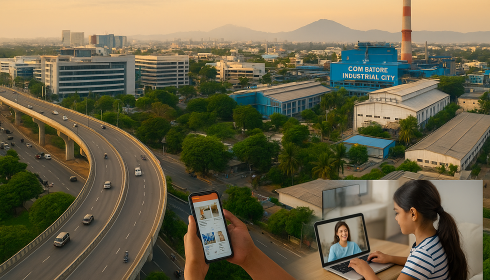
India is a world leader in adapting to a cashless economy, and UPI is playing a role in fundamentally changing the way payments are made. UPI enables instant money transfers between bank accounts using mobile devices. With its rapid adoption, India is creating an environment where financial services are accessible to all through digital technology.
As of 2025, UPI processes more than 16 billion transactions per month and is used for everything from peer-to-peer payments, to store payments, to utility bill payments. This explosive growth is fueled by ease of use, zero fees, and seamless interoperability between platforms. From street stalls to upscale stores, the proliferation of QR codes and mobile payments has enabled even those without bank accounts to participate in the formal economy.
Means of Payment Rooted in Everyday Life in India
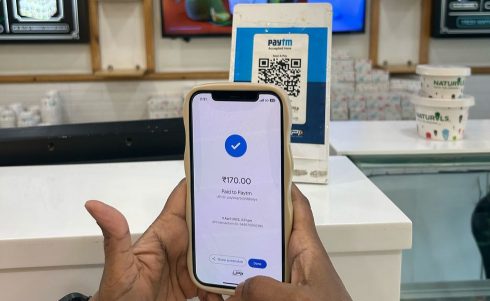
From shopping at the mall to paying utility bills to buying vegetables on the street, UPI is already a commonplace option for millions of Indians. If you forget your wallet, no problem, just use your smartphone. If you don't have enough money, you can send a QR code to a family member or friend to pay. Smooth, fast, and secure - that's the power of UPI.
The payment method is simple: simply select a contact (e.g., by reading a QR code or from information such as the phone number registered on the phone), enter the amount and UPI PIN to authenticate, and you will immediately receive a confirmation message and the money transfer is complete.
Deepika, a dentist in Bangalore, says her practice has tried many different payment methods, but since UPI came along, most patients have chosen it. It is fast, efficient, and saves time. It is convenient for the elderly, does not rely on cards or cash, and (with UPI Lite) does not even require a password.
For example, when a 15-year-old boy receives medical treatment, he can send a screenshot of a QR code to his mother after the treatment without having to carry cash, and his mother can complete the payment instantly by reading the QR code. She says, "If my daughter who lives in a hostel sends me a message that she's going to be short of money at the end of the month, I can send her money immediately, no matter where she is." She says.
Here are a few examples of how UPI can be used.
*Poonam Kapila, a housewife from Bangalore:
Poonam Kapila, a housewife in Bangalore: "UPI is hassle-free, easy to use, and allows for quick transactions. You can link multiple bank accounts with one app and switch between them easily. There are no fees. I hardly carry any cash anymore."
*Seliba, a fruit vendor in Bangalore:
"Before, it was difficult to prepare change and we would sometimes miss customers. But thanks to UPI, we don't have that problem anymore. It has made it easier for us to do business and has deepened our relationships with our customers. As a small business, we really appreciate it."
*Vennila, a financial businessman from Chennai:
"When my mother needed to be admitted to a rural hospital for new coronas, she was required to pay in advance. There was no cash available locally and I was still on my way from Chennai, so I was at a loss as to what to do. At that time, UPI was able to send money instantly and my mother was able to be hospitalized immediately. It was like a lifesaver."
*Mithun, an engineering student from a rural village in Tamil Nadu and a resident of Bangalore:
For a student, UPI is a necessity. Snacks in the cafeteria, buying educational materials, splitting a bill with friends, everything is easy with UPI; I don't have to look for an ATM and my parents can send money instantly, so it's really convenient."
This is what I heard from acquaintances who are familiar with the Japanese payment system.
*Anand, an engineer from Bangalore:
When I visited Japan, I was surprised by the cash system. As someone who is used to UPI, it was inconvenient and a hassle to carry around cash."
*Abirash, an AI engineer living in Osaka, Japan:
In Japan, cash is the norm and without a convenient mechanism like UPI, it would be very inconvenient. I ran out of cash while sightseeing in Hakone and had to run almost a kilometer to find an ATM.
What are the economic benefits of UPI?
The expansion of the UPI has also contributed to actual economic growth.
A study [*1] by IJFANS.org reported a 15% increase in monthly revenue in rural retail in Karnataka with the introduction of digital payments.
According to "IJRPR" [*2], as of February 2024, the total value of digital payments in India reached approximately 21 trillion rupees (about $2.52 trillion), of which UPI accounted for 81.8% of the total as of March 2024.
The UPI also boosted about 1.5% of GDP between 2017 and 2023 [*3], driving growth not only for small businesses but for the national economy as a whole. A Delhi case study [*4] published in JETIR also identified small businesses that increased their annual sales by 46.7%.
Digital infrastructure and mobile-driven design
India's digital infrastructure is optimized to be mobile-driven, which is key to UPI's success. According to the World Bank, more than 60% of India's population has Internet access, and according to GSMA Intelligence, mobile connectivity will reach 76.6% [*5] of the population by January 2025. This has facilitated the use of the app-centric UPI.
Japan, on the other hand, has a high Internet penetration rate, but is still strongly desktop-oriented, which seems to be different from the mobile-first trend. Mobile-first digital commerce in India is growing rapidly, with more than 500 million online shoppers expected [*6] by 2029.
Guidelines for Entering the Indian Market
Cash still seems to be the dominant method of payment in Japan, especially for small transactions. The national preference for cash, the availability of ATMs, and the development of cash-enabled infrastructure are hindering the diffusion of digital payments and placing a heavy burden on companies to implement and verify their marketing initiatives.
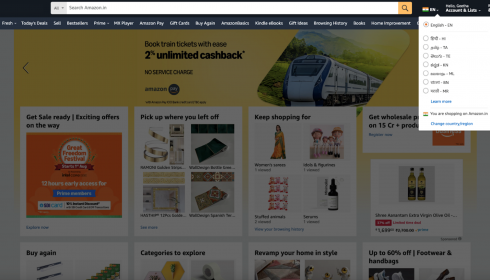
In Japan, multiple payment methods (QR codes, IC cards, bank apps) coexist, resulting in poor interoperability between platforms, whereas UPI is a simple, unified, mobile-first design that provides a reliable, government-supported, integrated infrastructure. Flipkart, and other mainstream online shopping platforms in India are also UPI-enabled, making test marketing easy and rapid PDCA execution possible.
Early decision and entry into the Indian market is crucial to establish a brand, and a flexible strategy and local adaptation will be the key to success.
Misconceptions of Japanese Companies and the Potential of the Indian Market
However, recent developments have led even small stores to accept UPI, and it is becoming popular even in regional cities. What'sApp (a mainstream communication tool in India) and apps are the mainstream for transactions, and are also used for the purchase of premium products.
Concerns about the Indian market (regulatory complexity, market uncertainty, payment security) can be mitigated through the use of local partners, the use of reliable platforms, and simple and secure payment instruments such as UPI.
UPI enables real-time, traceable payments and reduces the need for cash management. National projects such as "Make in India" and "Digital India" are also underway to promote economic and digital development led by the Indian government, increasing transparency and compliance.
Conclusion.
The success of UPI and digital payments is a very practical model for leveraging the power of technology to create an environment in which everyone can easily participate in economic activities regardless of their income or place of residence. These developments are also enabling both scalability and inclusion for businesses, allowing them to quickly test markets and sell products at low cost.
For Japanese companies, India is not just a destination, but a place to redesign their strategies, adopt mobile-first solutions, and challenge traditional business models.
A deep understanding of local culture, consumer behavior, and laws and regulations is key to success, and collaboration with local companies, leveraging Amazon and Flipkart, and adapting to a mobile-driven market environment will ensure smooth entry and long-term sustainability. Companies that face the Indian market with flexibility and collaboration will be the ones that succeed in this fast-growing digital society.
[*1]
https://ijfans.org/uploads/paper/12f6cef04c996b91049b199ee5794ff7.pdf
IJFANS (International Journal of Food and Nutritional Sciences)
"The Impact of Digital Payment Systems on Small Retail Businesses in Rural Karnataka"
2024
[*2]
https://www.bis.org/publ/bppdf/bispap152_e_rh.pdf
Bank for International Settlements (BIS)
The organisation of digital payments in India - lessons from the Unified Payments Interface (UPI)
2024
[*3]
https://ijrti.org/papers/IJRTI2501080.pdf
IJRTI (International Journal for Research Trends and Innovation)
"A Study on Unified Payment Interface (UPI) and its impact on the Indian Economy"
Year 2025
[*4]
https://www.jetir.org/view?paper=JETIR2208632
JETIR (Journal of Emerging Technologies and Innovative Research)
"Evaluating the Impact of Digital Payment Adoption on Small Businesses: A Case Study Approach".
2022.
[*5]
https://datareportal.com/reports/digital-2025-india
Digital 2025: India - DataReportal - Global Digital Insights
GSMA Intelligence
[*6]
https://www.globenewswire.com/news-release/2024/12/30/3002507/28124/en/Growth-Trends-in-India-s-E-Commerce-Market-2024-2029-500- Million-Online-Shoppers-by-2029-India-Poised-to-Become-One-of-the-World-S-Largest-E-Commerce-Markets.html
Growth Trends in India's E-Commerce Market, 2024-2029 - 500.
2024.
Author Profile
Everything you need for cross-border e-commerce, supported by
global omnichannel