The first step for Japanese SMEs to enter the Indian market with low risk - Local test sales strategy - Using UPI, it is easier for Japanese SMEs to enter the Indian market - The first step for Japanese SMEs to enter the Indian market with low risk
India is currently undergoing a tectonic shift in consumption, both in urban and rural areas.
With over 25 years of experience supporting the domestic and global marketing efforts of numerous well-known companies, eLife supports its Japanese partners in taking the first steps toward expansion in India by carefully picking up the perspectives of local consumers to ensure that they take the first steps in their exploration.
In this column, four people who are well versed in India will share their perspectives on the latest developments and insights from the country. We will provide you with a variety of perspectives on India, which is in the midst of change.
▶ View author profiles
Introduction
Hello, my name is Geetha Anand.
India is an attractive investment destination for foreign investors due to its huge consumer market due to its huge population, business-friendly environment, and proactive government support measures. However, the reality is that Japanese small and medium enterprises (SMEs) face high hurdles to enter the Indian market due to the high initial investment and long-term preparation required.
The Unified Payments Interface (UPI), a digital payment platform that is rapidly gaining popularity in India, is attracting attention in this context. UPI allows you to not only test market your products in a real market environment, but also to launch your business quickly and cost effectively. UPI can be a powerful tool for Japanese SMEs to enter the Indian market, as it allows them to determine the suitability of their products and business models while minimizing risk.
UPI (Unified Payments Interface) is an instant payment system widely used in India. For more details, please check our previous articles.
UPI enables "sell first and see how people respond" test marketing.
Test selling a new product in Japan requires a lot of preparation and high costs, such as securing shelf space, installing a POS system, assigning staff, and even setting up a complex payment environment. In contrast, with UPI in India, all you need is a smartphone, a QR code, and a small sales space, and you can start selling immediately. Receiving payment is also quick and easy.
This simplified sales format is very effective for companies to conduct "sell first and see how consumers respond" style test marketing. Furthermore, UPI can be linked to multiple channels such as online, mobile apps, and in-person sales, allowing for flexible marketing through various customer contact points.
Offline exhibition through trade shows, malls, pop-ups, etc.
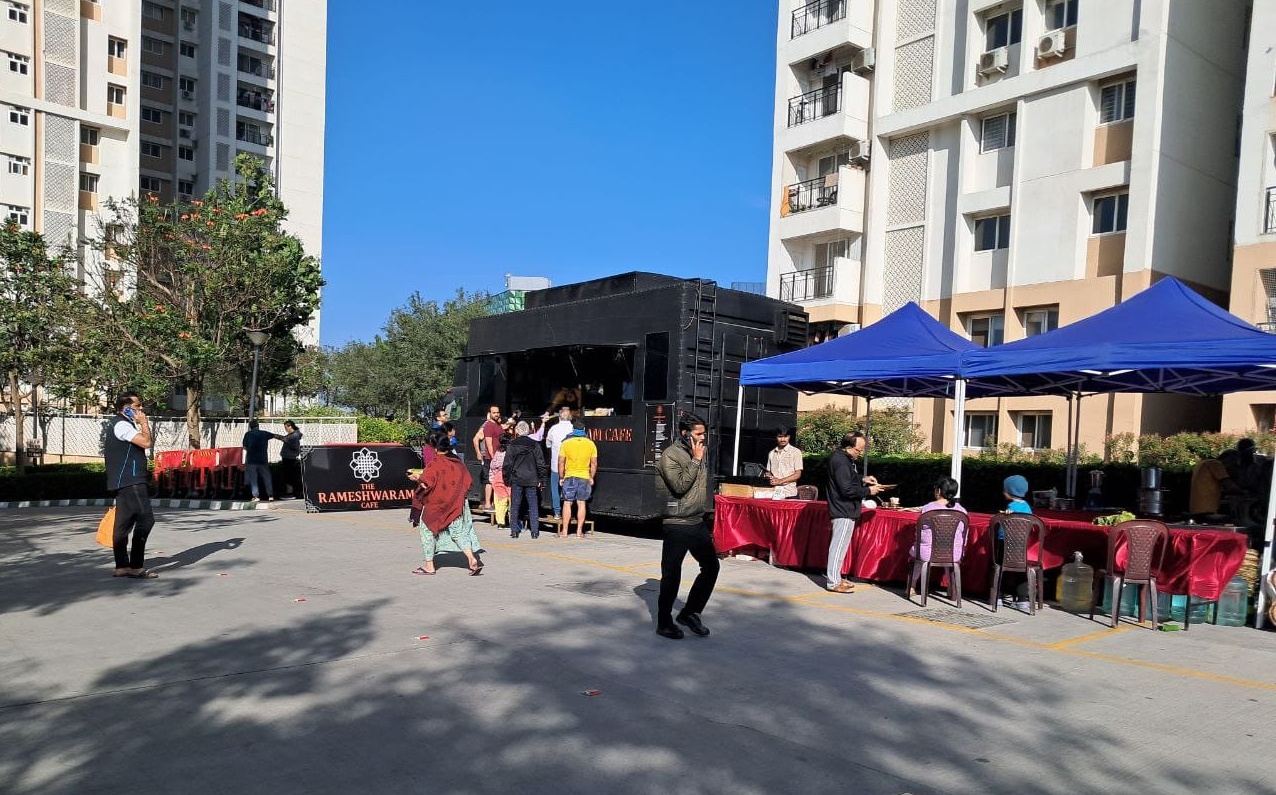
Japanese SMEs considering entering the Indian market can introduce their products in venues where they can actually connect with consumers, such as pop-up stores in malls (sales booths set up for a short period of time in malls or train stations), exhibitions, subway stations, and short-term sales events at commercial facilities. By displaying your products at these venues and accepting UPI payments at the same time as sales, you can immediately obtain valuable information such as sales data, customer response, and purchasing behavior.
This information will help determine if the product is officially ready for the market or if it needs to be improved. If the price is perceived as too high, it will be easier to take measures such as adjusting the price while maintaining quality.
Online product placement and test sales by UPI
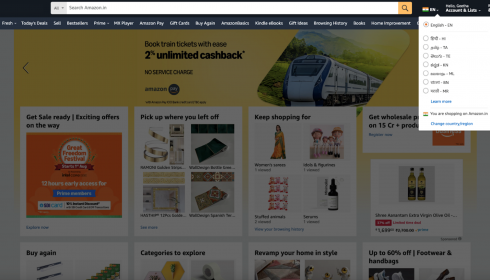
Leveraging online channels to introduce products is also effective. Many e-commerce sites and Social media advertising platforms work with UPI, and by providing a payment link on the product introduction page, consumers can make a smooth purchase on the spot.
By using UPI, you can easily collect post-sales feedback and analyze customer behavior. UPI makes it easy to collect post-sales feedback and analyze customer behavior.
Quick decision making based on real-time data
UPI payments provide detailed transaction data in real time, including the date, time, amount, and payer information of the transaction. Companies can utilize UPI-integrated apps and messaging functions to quickly gather feedback from customers and provide post-purchase support.
All transaction histories are recorded and can be searched and analyzed, including information on successes and failures. This allows us to identify trends in transaction volume and factors contributing to settlement failures, and to consider remedial measures. Such data can be used to understand customer purchasing trends and preferences and improve the accuracy of test marketing.
Even for short-term, small-scale sales, useful information such as "time of sale" and "average purchase price per unit" can be obtained. For SMEs looking to expand into new markets, such knowledge is an important asset to support decision-making.
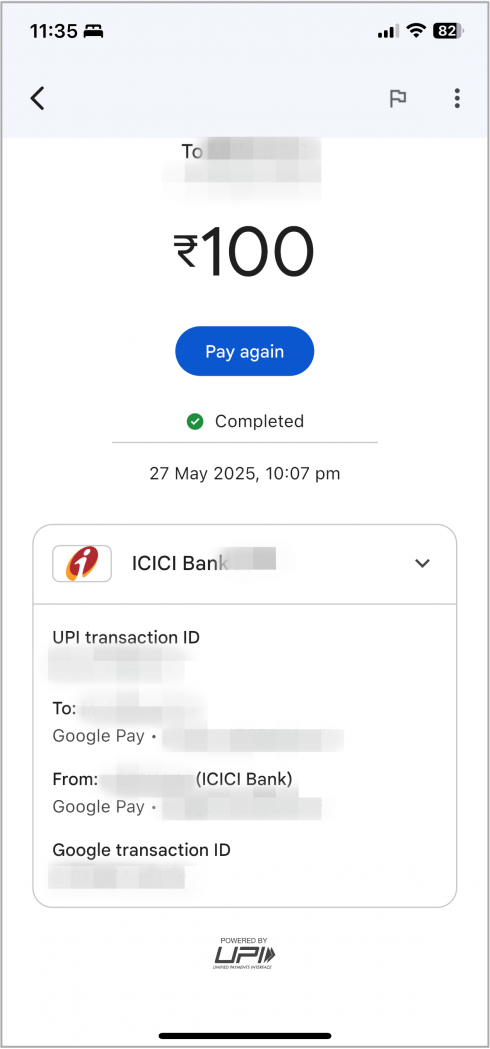
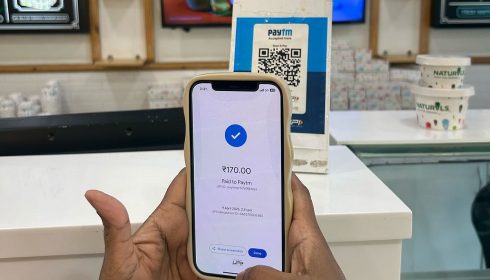
Transaction Completion Screen
Detailed information about the transaction is stored as a log.
In India, "Advance Payment x Flexible Support" enables business operations with less risk.
In India, the culture of "prepayment" (prepaid) through UPI is widespread, and consumers tend to pay in advance with confidence. Transactions are also highly reliable because they can be confirmed in real time.
This allows small and medium-sized Japanese companies the flexibility to operate without inventory, receiving orders and settling payments first, and manufacturing and purchasing goods only after orders are confirmed. This model is very well suited for a prudent market entry strategy, as it significantly reduces inventory risk, disposal losses, and storage costs, as well as financial risk.
Indian consumers like new things - they can compete without brand power
Indian consumers are curious about new things and are willing to try them out. This characteristic, coupled with the smooth payment experience offered by UPI, opens up market entry opportunities for foreign brands.
Because of the strong influence of Social media reviews, and influencers, even small businesses with low name recognition can attract enough attention with unique and attractive products.
Butterfly Kids and Ladies, a retail store that achieved efficiency through the introduction of UPI
Store name: Butterfly Kids and Ladies
Location: Mysore, Karnataka, India
Type of Business: Retail of ready-to-wear clothing
Number of Customers: More than 15,000
Number of customers: More than 15,000
The store offers affordable and trendy clothing for children and women and is very popular in the community. Along with its popularity, the store faced issues such as overcrowding at the cash register during peak hours, cash handling, and credit card processing time.
Solution: Introduction of UPI (2022)
Eliminated the need to exchange cash and change, speeding up the checkout process.
More than 65% of customers will use UPI, increasing satisfaction.
Reduced risk of theft and human error in cash management
Unlike credit cards, UPI has zero or very low fees, improving store profit margins.
Owner's comments:
"Since implementing UPI, we have seen over 65% of our customers using the service, no need to carry cash or cards, and smoother checkout. We are able to serve more customers without stress than before, and we are less worried about customers leaving because of delays in checkout."
Conclusion: UPI is a realistic first step for Japanese SMEs to enter India
UPI is a practical, risk-free way for Japanese SMEs to enter the Indian market. Its ease of use, low cost of implementation, and ability to obtain real-time customer feedback make it ideal for testing new products and services.
Prior to establishing a large-scale corporation or logistics system, a small-scale, short-term market test can be conducted to confirm consumer response and develop a strategy. As digital payments in India become more commonplace, UPI will be the key to smart overseas expansion for Japanese SMEs: "Start small, get a solid response, and then expand.
Author Profile
Everything you need for cross-border e-commerce, supported by
global omnichannel