Indian Market's Main Battleground to Tier 2 Cities - Growing Consumers and Business Opportunities
India is currently undergoing a tectonic shift in consumption, both in urban and rural areas.
With over 25 years of experience supporting the domestic and global marketing efforts of numerous well-known companies, eLife supports its Japanese partners in taking the first steps toward expansion in India by carefully picking up the perspectives of local consumers to ensure that they take the first steps in their exploration.
In this column, four people who are well versed in India will share their perspectives on the latest developments and insights from the country. We will provide you with a variety of perspectives on India, which is in the midst of change.
▶ View author profiles
Introduction
Hello, my name is Geetha Anand.
In the past, India's economic growth has been concentrated in metropolitan areas like Mumbai, Delhi, Bangalore and Chennai. Now, however, Tier II cities such as Indore, Coimbatore, Lucknow, Bhubaneswar and Surat are emerging as new growth centers. Bhubaneswar and Surat are emerging as new growth centers. Here, more industrial investment is taking place, infrastructure is being developed, people are becoming better educated, and households have more purchasing power than ever before.
Importantly, these cities are not "fringe" cities dependent on the larger cities, but are self-sustaining centers of growth. They have their own local economies, young, tech-savvy consumers, and increased exposure to local brands and new ideas. With affordable Internet access, people are discovering new products online every day and are influenced by social media to make consumption decisions.
The real strength of Tier 2 cities lies in their "margins" for business. Competition is still low, operating costs are affordable, and consumers are flexible enough to accept new brands and services. For companies that can adapt their business to local needs, Tier 2 cities offer a great opportunity to build trust and loyalty "before the market gets crowded.
Local Cities Supporting Digital India
The proliferation of smartphones and low-cost data communication has made Internet use a routine across India. Today, more than half of India's online consumers come from outside metropolitan areas [*1].
Against this backdrop, e-commerce, OTT entertainment (subscription video streaming, etc.), fintech, and even premium D2C brands are in strong demand from Tier 2 cities. Residents are a "mobile-first generation," enjoying content in their own language, following local influencers, and willing to try new apps and services that fit their lifestyle.
They want the same choices, experiences and quality as in Mumbai and Delhi. They are exploring new brands, shopping more frequently, and buying everything from groceries to gadgets on digital platforms. If brands can reach these consumers early and offer the right products, prices, and communication in local languages, they will win their long-term loyalty.
Rising incomes and changing consumption styles
Industrial expansion, decentralization of the IT sector, real estate development, and higher education levels are driving economic growth in Tier 2 cities.
Rising household incomes have led families to seek higher standards of living, premium products, and international experiences. Aspirational consumption is no longer just a big-city phenomenon. Moreover, consumers in Tier 2 cities have more limited choices, which leads to higher brand loyalty and higher retention rates despite lower acquisition costs.
Local Languages Create Trust
Furthermore, as mentioned in a previous article, more than 70% of Indian Internet users prefer content in their native language [*2]. Platforms, apps, and campaigns that leverage regional languages are far more effective than English-driven approaches.
By localizing packaging, advertising, and customer support in local languages, brands can gain consumer trust and speedy retention. In cities where word of mouth remains influential, language support is not a "tactic" but a "requirement.
Social Media and the Impact of Local Influencers
Influencers in Tier 2 cities have a sense of "kinship" that national celebrities do not. They speak the same dialect, share the same culture, and live the same lifestyle, making it easier for them to earn the trust of consumers. This is a unique characteristic of India, where each city has its own unique culture.
As a result, local influencer endorsements are more compelling. For companies, working with local creators and micro-influencers is a shortcut to accelerating brand acceptance and building a loyal customer base faster than traditional advertising.
Blue Ocean with little competition
Many major brands still treat Tier 2 cities as "secondary markets". This is a huge opportunity for small and medium-sized enterprises (MSMEs), start-ups, and companies expanding abroad.
In fact, Tier 2 cities account for 51% of all MSMEs in India [*3]. Real estate is inexpensive and local partners are easy to acquire. Local influencers with the same cultural background are easy to gain trust. Early entrants can take advantage of less competition to build long-term relationships.
In addition, low office and marketing costs and an abundant talent pool make it easier for businesses to experiment and expand, with less financial burden than in larger cities.
Fastest growing industrial sectors [*4].
Tier 2 cities are experiencing growth in a variety of industries.
- Retail & E-commerce: Fashion, electronics and lifestyle products are in high demand online
- Food & FMCG: Processed foods, dietary supplements, and premium household products are gaining in popularity
- Education and Edtech: Families actively invest in their children's online learning and skills development
- Medical/Healthcare: Increased demand for quality services such as telemedicine and wellness products
- Technology startups: co-working spaces, IT hubs, and regional startups expand
Infrastructure and Policy Boosts
The Indian government is pursuing various policies to boost the growth of local cities. For example, "Digital India" (nationwide digitalization drive), "Smart Cities Mission" (modernization of urban infrastructure), and "Startup India" (measures to support entrepreneurship).
These efforts have led to the widespread use of the Internet and digital payments in the Tier 2 cities, and the rapid development of transportation infrastructure such as roads, airports, and subways. Convenience previously concentrated in large cities is now spreading to rural areas, making it easier for companies to expand into new areas and for consumers to accept the latest services.
India's growth extends beyond its major cities
The rise of Tier 2 cities over the next decade will change the way companies view the Indian market. It is no longer a "secondary market" but the main stage of growth. Low cost of entry, a growing middle class, and consumers willing to try new products and services. With all these conditions, Tier 2 cities offer companies opportunities that are not available in the big cities.
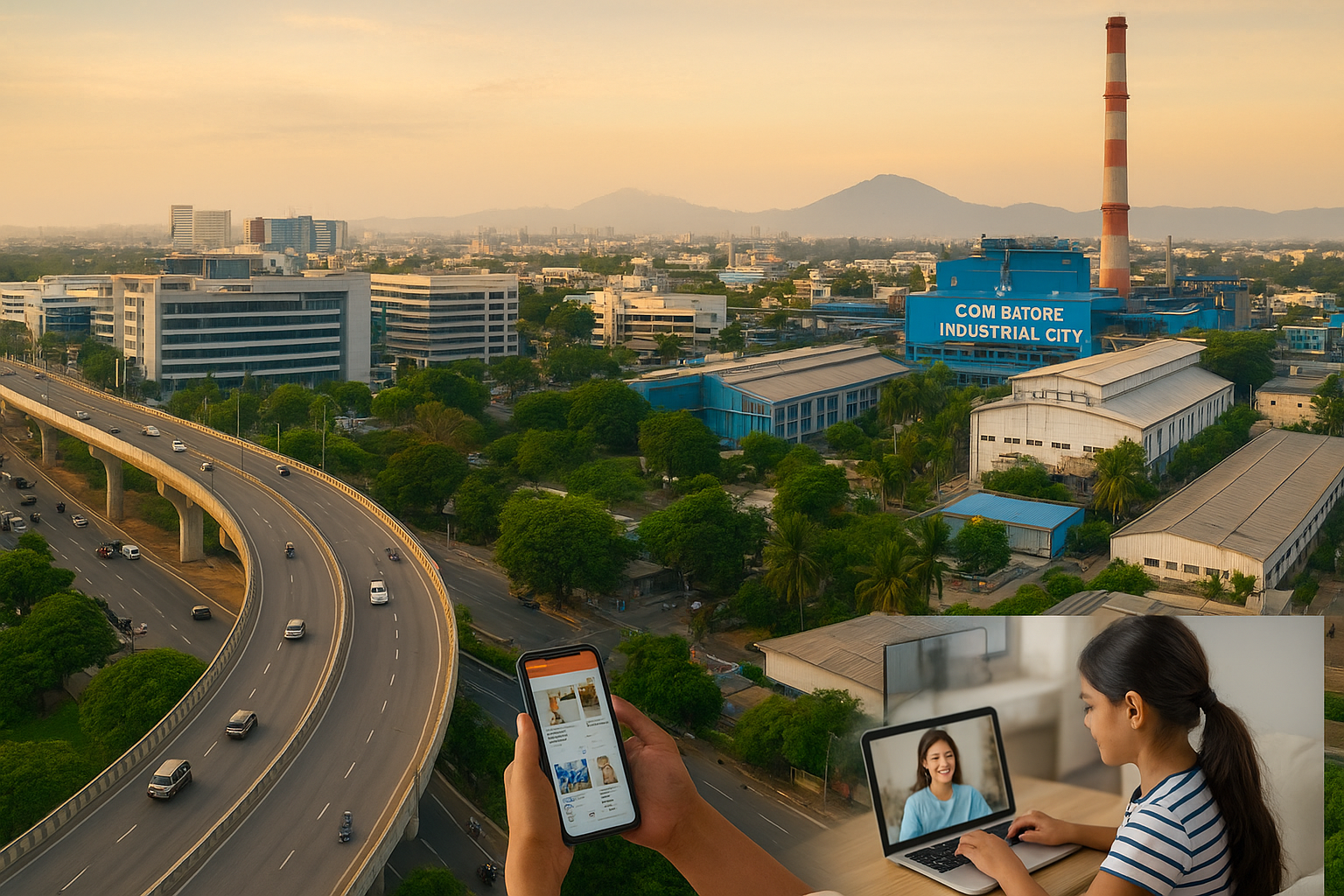
Tier 2 city image
Consumer openness and youth power
Consumers in Tier 2 cities are open to new ideas. They do not hesitate to embrace online shopping, UPI payments, and the use of global brands.
Younger generations in particular are ambitious and technology savvy, pursuing not only products and services, but also global brands, education, and modern lifestyles. They adapt quickly to new platforms and payment methods, which will drive market growth in the long run.
Voices from the Field
Sharada Nanta Kumar, a housewife living in Coimbatore, said.
Coimbatore has long been known for its engineering and manufacturing industries and continues to attract multinationals. Robert Bosch GmbH, Alstom, and Baker Hughes (*) have set up shop here, and IT giants are also based here. Coworking spaces used by local startups are also increasing. The use of digital services has become a way of life, with Amazon, Flipkart, Swiggy, Zomato, and Porter (*) being used on a daily basis. On the educational front, students of the IB curriculum (*) are receiving online tutoring, and global standards of learning are being embraced naturally."
*Robert Bosch = major auto parts company, Alstom = major rail infrastructure company, Baker Hughes = major energy equipment company. All are global companies with locations in Tier 2 cities.
*Flipkart = Amazon-type general e-commerce; Swiggy & Zomato = Uber Eats-type food delivery; Porter = urban delivery service like Grab Express
*IB (International Baccalaureate) curriculum = an educational program that directly leads to an international university entrance qualification. In India, it is being introduced not only in major cities but also in regional cities.
Summary: To succeed in the Indian market
Tier 2 cities will be the next growth drivers in India. With rising incomes, infrastructure development, and digital penetration, consumers are young, ambitious, and willing to embrace new services.
Companies are required to respond to local needs, communicate in local languages, and work with local partners. Initial costs are low and competition is limited. It is easier to build customer loyalty than in large cities.
Establishing a presence in Tier 2 cities before falling behind the competition in the larger cities will determine sustained growth in the Indian market.
More Case Studies
While this paper provides an overview of Tier 2 cities in India, we can provide specific analysis and case studies tailored to your product category and business objectives. Please contact us for more details and we will be happy to provide you with individualized information.
Examples of case study content that can be provided
- Characteristics of population size, income levels, and consumption sectors by city
- Sales strategies and advertising methods on major platforms such as Flipkart, Swiggy, Zomato, etc.
- Comparison of local influencer use cases and effectiveness of traditional advertising
- Entry benefits from policy support (Digital India / Smart Cities Mission)
- Acceptability of Japanese brands in consumer goods (food, cosmetics, daily necessities)
- Competitive landscape and market saturation by city
- Actual use of offline (malls, retail stores) and online channels
[*1]
Available at: https://www.indianretailer.com/article/technology-e-commerce/digital-trends/indias-summer-e-commerce-boom-2025-tier-iii-cities
IndianRetailer.com & Retailer Media, Jul 04, 2025
India's Summer E-commerce Boom 2025: Tier III Cities Lead the Charge, Lifestyle Categories Surge
[*2]
https://qz.com/india/972844/indias-internet-users-have-more-faith-in-content-thats-not-in-english-study-says
Quartz - Tech and Innovation, July 21, 2022
India's internet users have more faith in content that's not in English
[*3]
https://www.investindia.gov.in/team-india-blogs/rise-indias-tier-2-and-3-cities-investment-hubs
Invest India, June 02, 2025
The Rise Of India's Tier 2 And 3 Cities As Investment Hubs
[*4]
https://ficci.in/public/storage/SPDocument/24030/96dnNn2uqeYtundPb3PZoa8MZy8b8Y4g1Pjj8Knl.pdf
Deloitte, FICCI, October 2024
Spurring growth in FMCG, retail and e-commerce sectors in India
Author Profile
Everything you need for cross-border e-commerce, supported by
global omnichannel