The "Kodawari Bar Fan Club" is an online gathering of men in their 50s. The "fun of drinking places" that has continued since the Showa period was there.
Fan marketing, D2C, and other terms vary, but more and more companies are now trying to connect directly with their customers. In this series of interviews with partner companies that practice partner relationship management (PRM), including communities, we will clarify "why direct connection is necessary" and "what companies need to change accordingly. The interviewer is Tatsuo Ishii, Executive Advisor of Kao Corporation, who has long been involved in brand marketing at Kao Corporation.
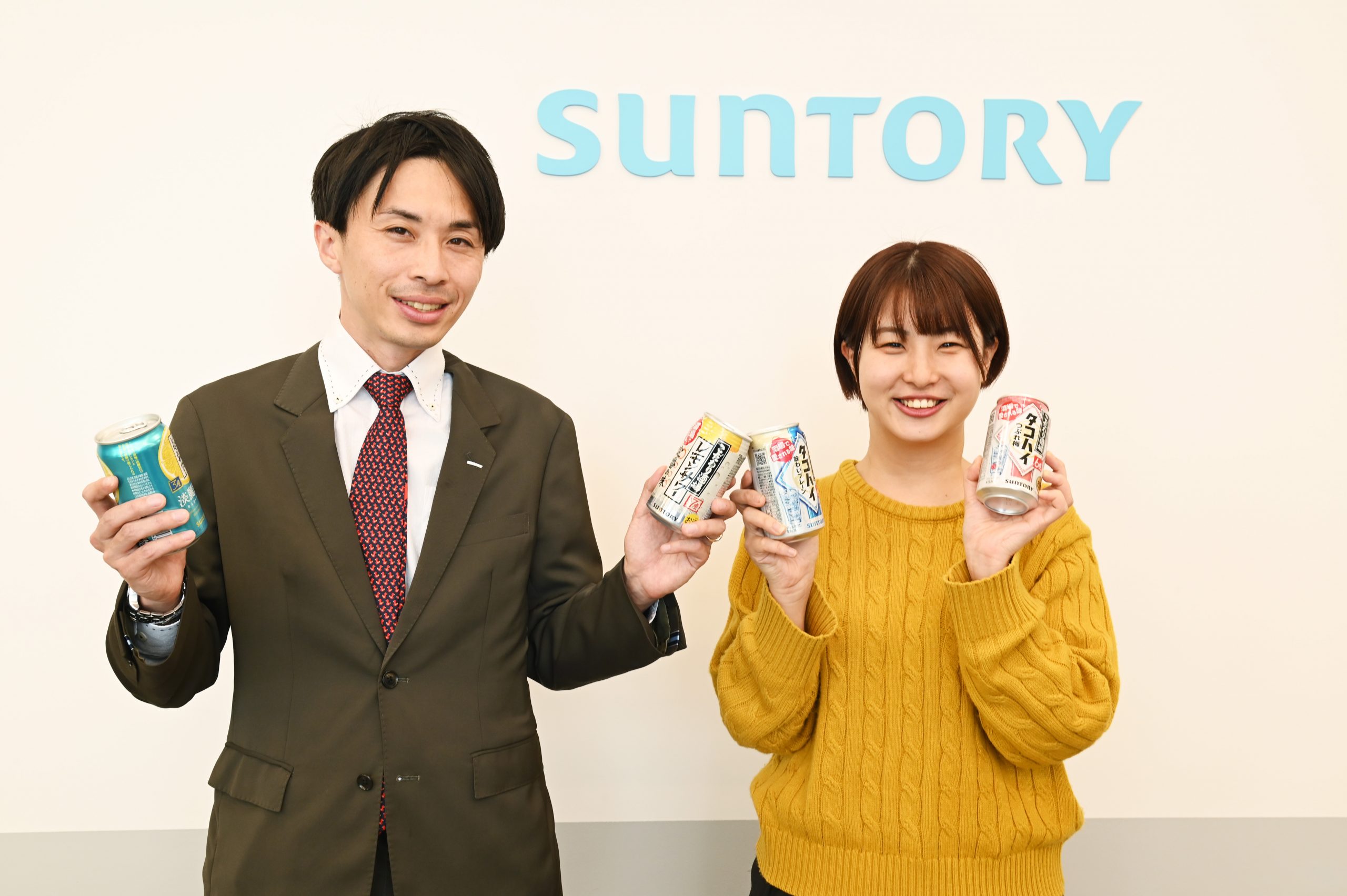
Suntory's "Kodawari Sake-Ba Fan Club" is an online community for people who love Suntory's "Kodawari Sake-Ba" series products, such as "Kodawari Sake-Ba Lemon Sour" and "Kodawari Sake-Ba Taco High," which are well-known for their TV commercials.
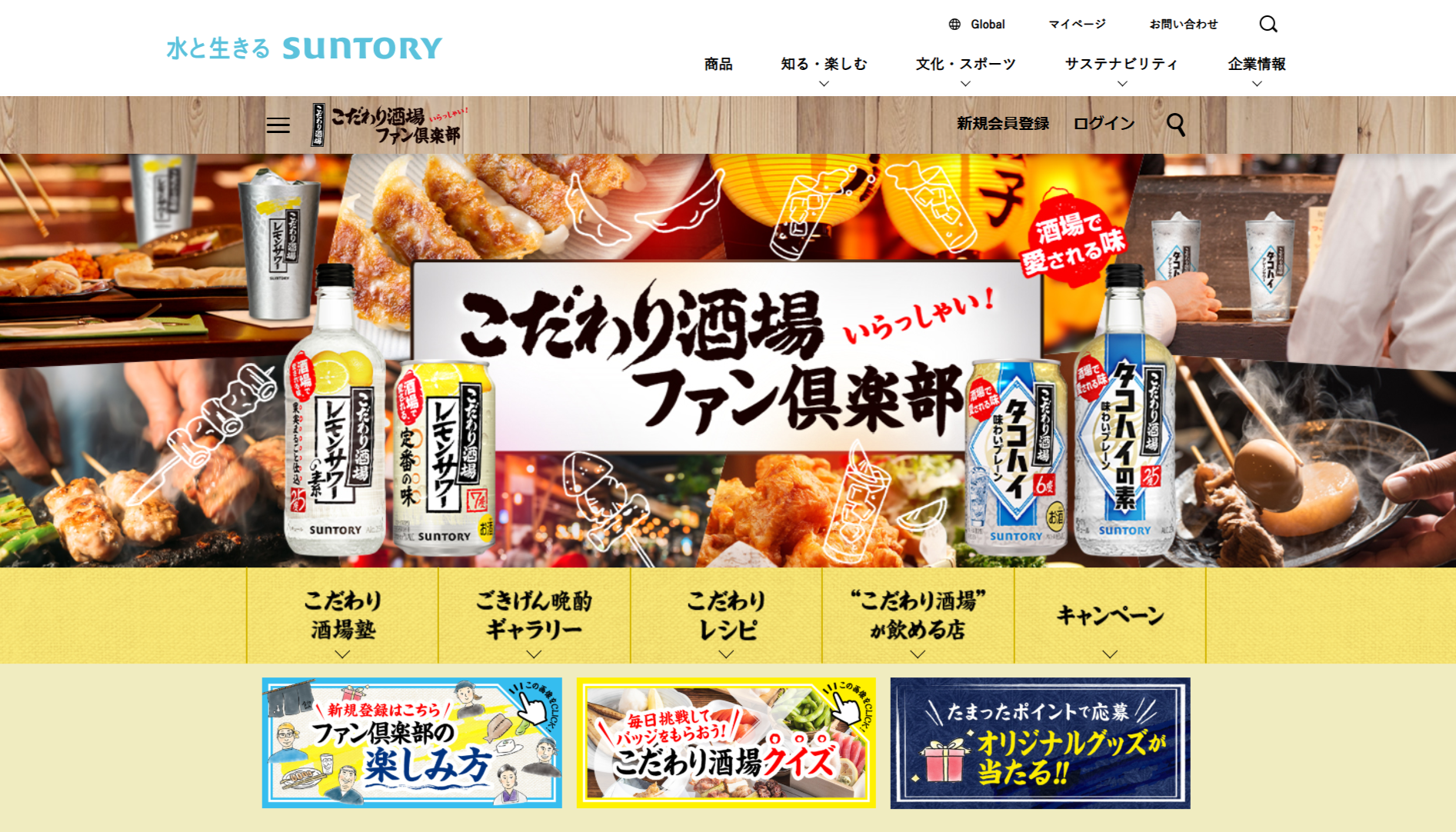
The site features an izakaya-style design, with izakaya waiter-like characters such as "Taisyo," "Okami," and "Remokichi" that enhance communication by introducing information and following up on comments.
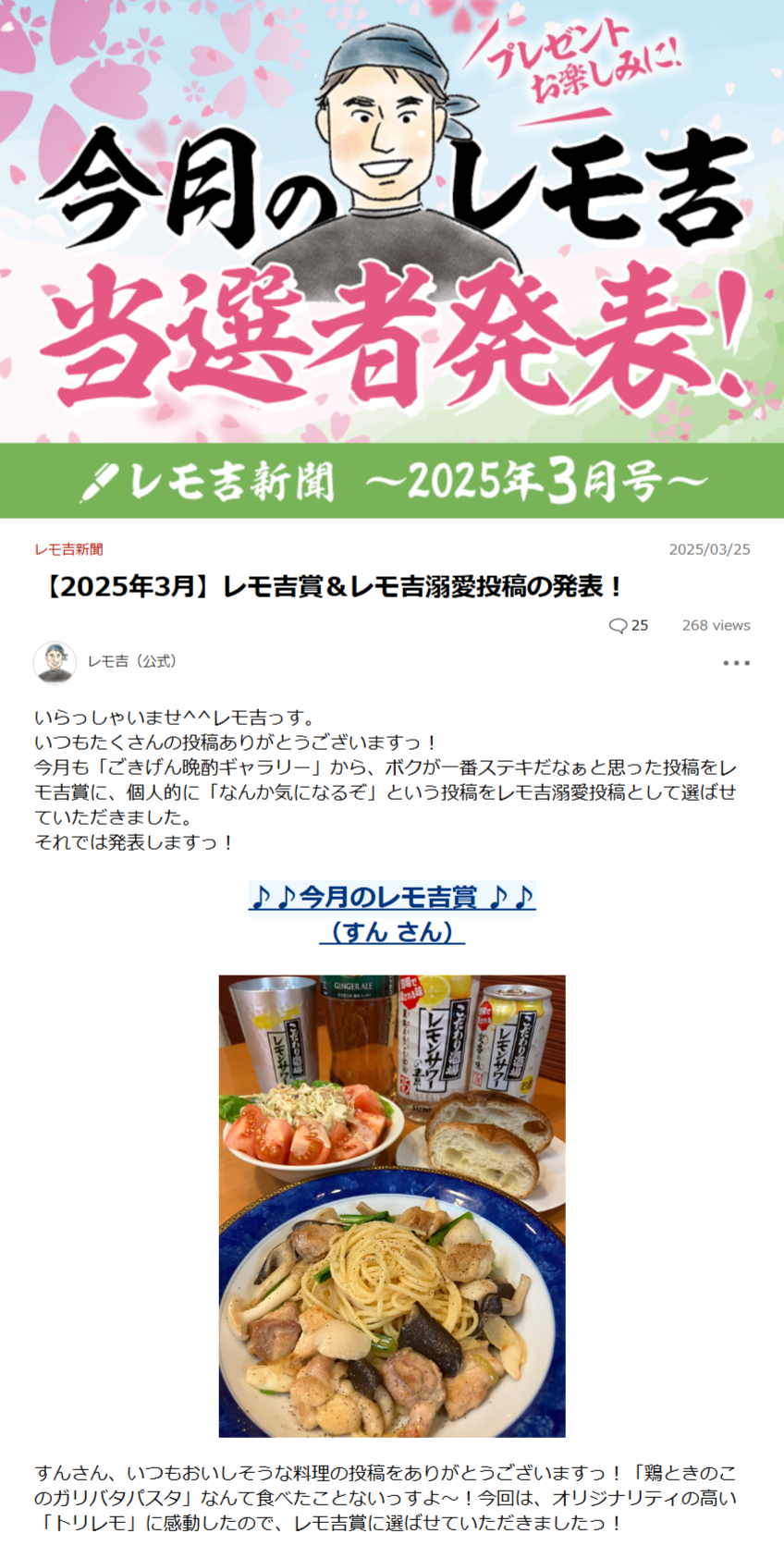
The fact that it is a branded community rather than a company or category-based one, and that the volume zone of members is men in their 50s, makes it unique among the communities supported by eLife.
How is the community designed to establish a commodity product, RTD (an abbreviation for "Ready to Drink," an alcoholic beverage such as canned chuhai, canned cocktails, and canned highballs that can be drunk straight away) as a brand? And what is the relationship with mass communication using commercials? We interviewed Mr. Hyonju Shu of the company's RTD Department, who is in charge of the brand, and Ms. Mari Ishimitsu, who is in charge of community management.
- How to break free from the idea that "all lemon sours are the same.
- The "ideal customer" so much so that I suspect it was planted.
- Bringing the heat of the community out through commercials
- Utilizing the ease of RTDs, we offer a little color to your daily life.
- We want to give back to the "bar" that created our brand.
--Please start by telling us how you started the community.
The "Kodawari Sour" series started in 2018 with the release of "Kodawari Sour no Lemon Sour no Moto", a soda-only liqueur, and in 2019 with the release of "Kodawari Sour no Lemon Sour", a canned chu-hai. At the time, the lemon sour served at restaurants was a mixed bag, and the brand's philosophy at the time of its launch was to "create a lemon sour that is right in the middle of the standard.
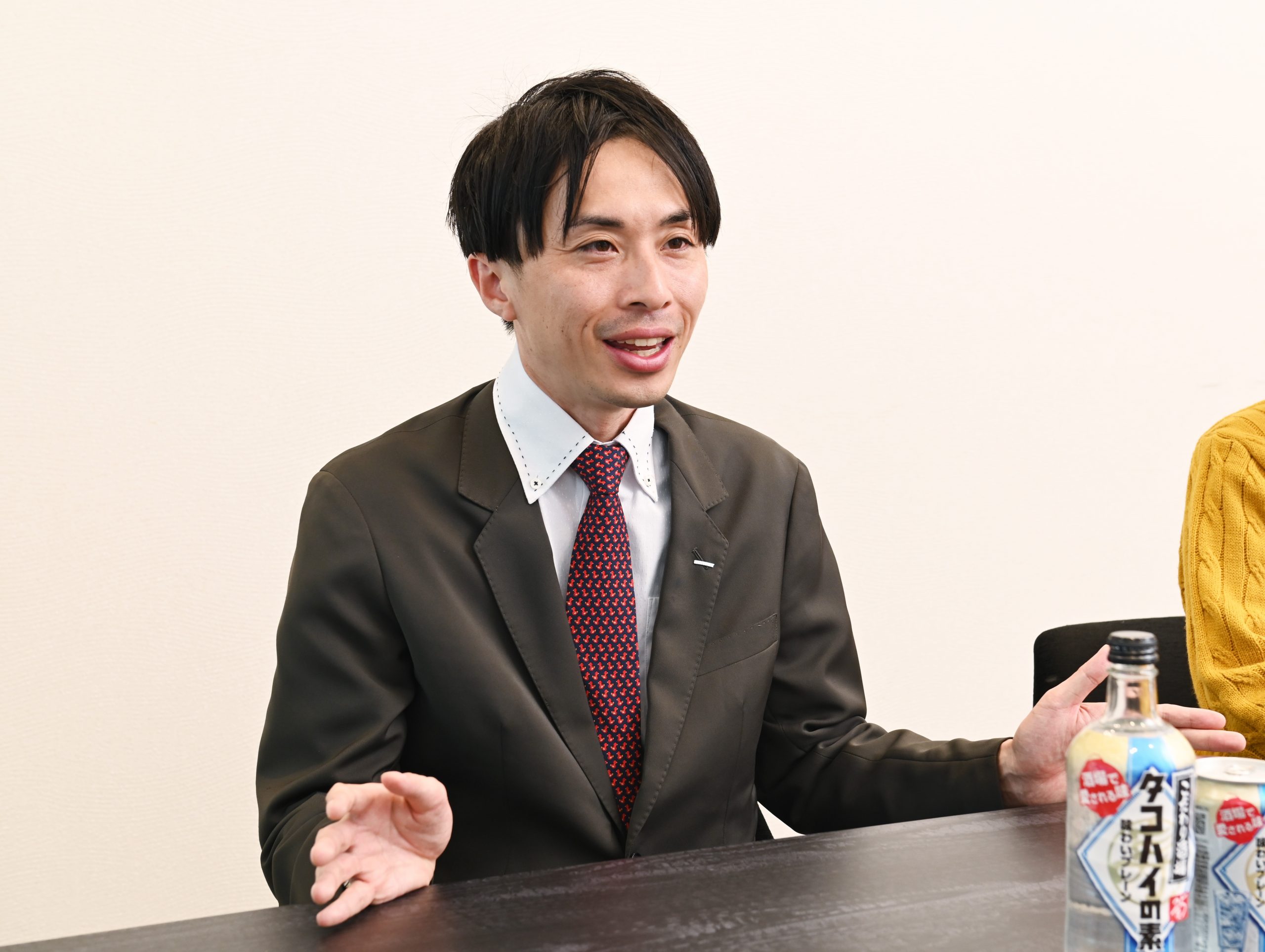
Mr. Hyonju Shu, RTD Department, Beer & RTD Division, Suntory Spirits Ltd.
Lemon sours subsequently became a boom, and companies launched products in rapid succession, with more than 50 different brands available at stores at the peak of the boom. At the peak of the boom, there were more than 50 different brands in stores. However, I think the general perception of customers at the time was that "all lemon sours are the same.
Since our product was the spark that ignited the boom, our sales and recognition were high at that time, but we felt a sense of crisis that we had to somehow differentiate our product from others when we thought about the future. It was under these circumstances that we launched this community in 2021.
When we searched for opinions about "Kodawari Sour Lemon Sour" on Social media most people used the general category name "Lemon Sour" and rarely specified the product name, making it difficult to pick up opinions about the brand. It was also difficult to pick up opinions about the brand. Therefore, I think there was a big motivation to make contact with real customers.
--The "Kochidoki Bar" was a place for customers to understand that "Kochidoki Bar's Lemon Sour is different from other lemon sours," and also a place to learn about the kind of people who enjoy drinking "Kochidoki Bar's Lemon Sour.
【Shu】 That's right. Also, as the brand name "sake bar" suggests, we place importance on the fun, wai-wai atmosphere of a restaurant. Even though the function is the same as other lemon sours, we want to express "the fun of connecting with people through alcohol" beyond that. The affinity with such a concept was one of the reasons for creating the community.
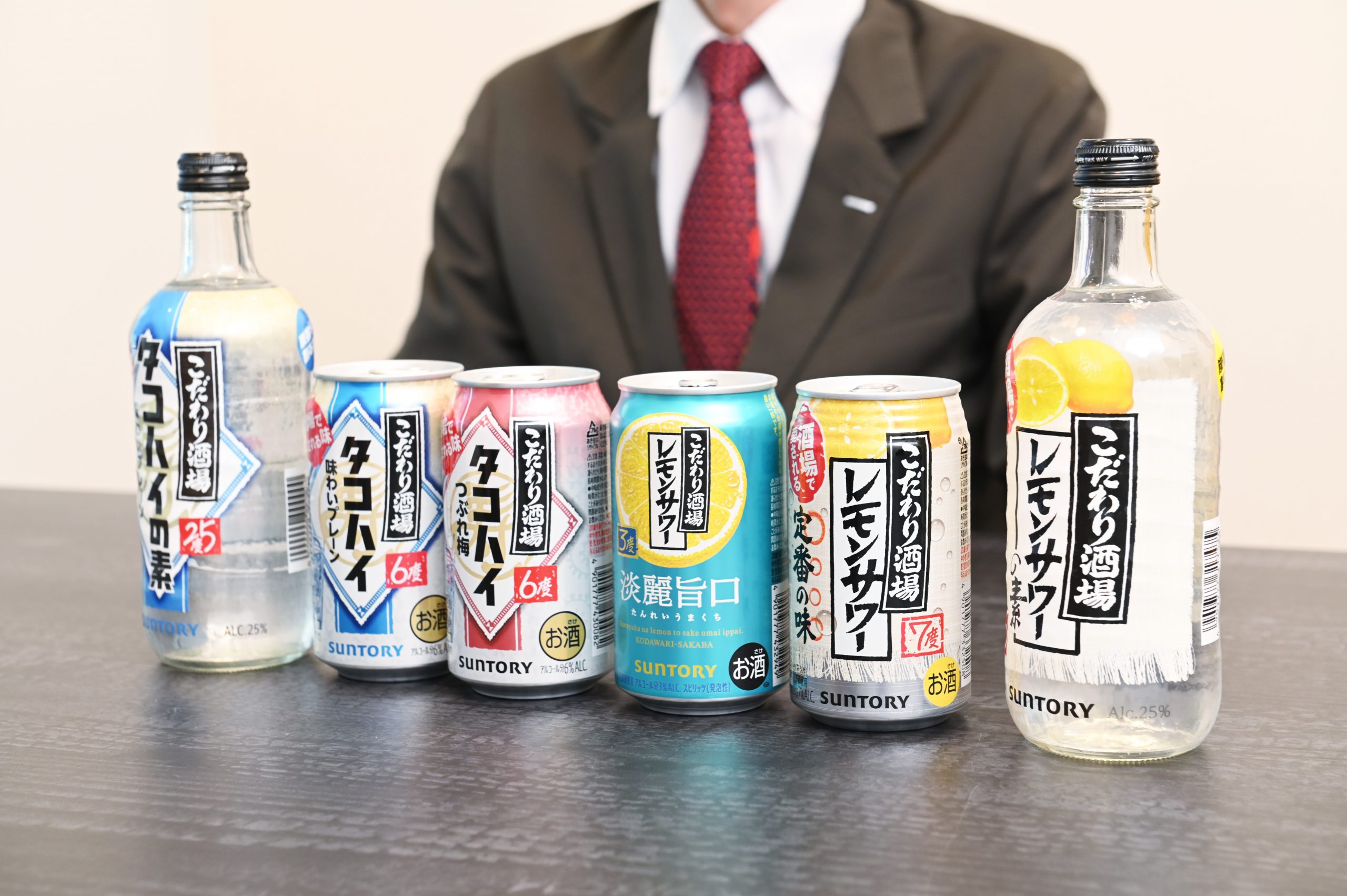
In addition to "Kodawari Bar's Lemon Sour," the company has expanded the series to include "Taco High" and "Tea Sour - Iemon" (as of April 2025).
--What kind of place do you see as a community, Ms. Ishimitsu, as the person in charge of the site?
【Ishimitsu】 The "Kodawari-Soba Fan Club" is a gathering of people who already love "Kodawari-Soba," in other words, fans. From the brand's perspective, this is a place where these fans can deepen their attachment to the brand and become core fans through their own contributions and interaction with other fans. Ideally, they will then spread their enthusiasm to others in their real lives.
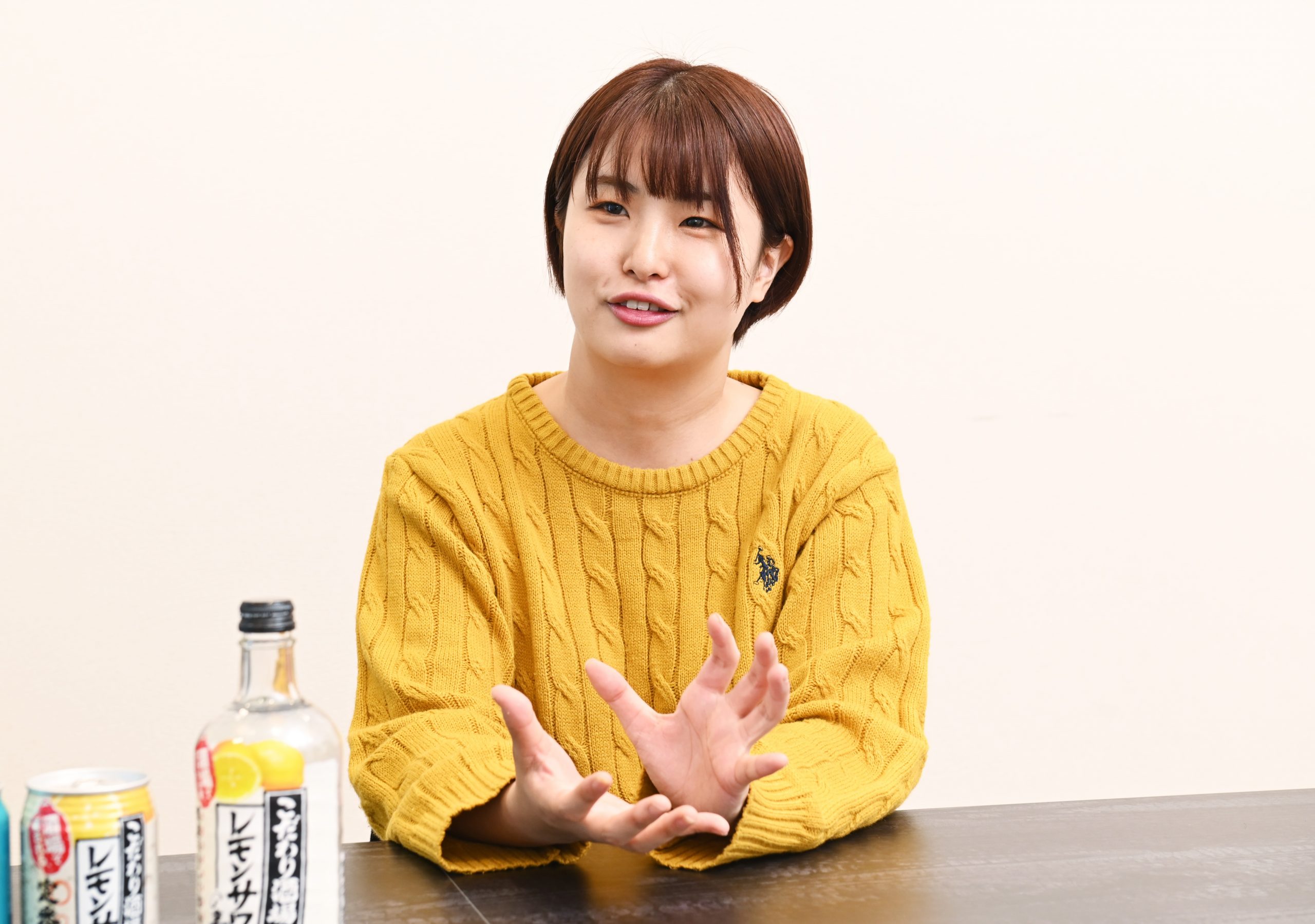
Ms. Mari Ishimitsu, RTD Department, Beer & RTD Division, Suntory Spirits Ltd.
--Are there any places where you actually feel such a ripple effect?
【Ishimitsu】 Thankfully, we have "specialty users" who wear our original goods to work or advertise our new products whenever they are released, even though we have not asked them to do so. We, for our part, are always wondering, "Why do they go to such lengths?" We are always surprised when they do things that make us wonder, "Why do they do that much for us? We feel that the number of fans is growing and spreading around these people.
--spontaneously to that extent. From the brand's point of view, it's the ideal fan.
We have a concept that is very important to us at "Kodawari Sake Brewery": "Good Mood Evening Drinks". We want people who drink our products to be in a better mood at any time than they were before they drank them. We always keep this in mind when creating and promoting our products. However, this is only an internal concept. We don't say so publicly.
When I first became in charge of this community a year ago, I was so suspicious when I saw it for the first time that I thought, "Isn't this a setup? I was so suspicious when I saw them for the first time. I was surprised at how many people embodied what we wanted to do and what we wanted to convey. If the community is a place where we can see such realistic personas, then I thought this was an amazing mechanism.
--I could sense that you are getting a good response as a community representative, but is there anything that the company is asking for in terms of sales or other tangible results?
【Shu】 Of course there is nothing that is not there. When it comes time to create a budget each year, things like cost-effectiveness are naturally discussed. However, our company has always had the value that "if you look at things only in terms of a numerical value, they become boring. I believe that a community is something that cannot be linked to sales by itself, but there may be a place where the company understands and supports such an idea.
【Ishimitsu】 We conduct a quantitative survey once a year, asking about demographics and frequency of purchases, to see changes over time. However, what I see from the behavior of users in the community is a level of enthusiasm that is quite different from what I can see from such surveys.
This is my third year with the company, and I am still learning, but I understand that marketing is "to occupy the customer's mind with the brand.
If that is the case, the most meaningful thing for a brand manager is to get a peek inside the heads of the people who post daily in the community, that is, the customers who love the brand the most. I believe that is not something that can be easily quantified.
--On the other hand, "Kodawari Bar" also does mass marketing such as TV commercials, right? What do you think about the relationship between the community and commercials?
【Shu】 While the community is for the fans, what we want to do with the commercial is how to turn to people who don't like it yet. There are so many lemon sour brands in the world that the general public has no idea which one is which. I believe that the commercials are there so that when these people stop by a store, they will think, "I've seen this somewhere before," and pick up the product.
When we make a commercial, we spend more than a month discussing the content with advertising agencies. I believe that the agencies love the brand, but even so, they do not know the real situation of the customers. The fan community serves as a place to turn to in such cases.
In this community, there are already people who love the brand, people who embody the "good mood evening drink". Our winning pattern is to bring that enthusiasm to those who have not yet had a drink. I think it would be ideal if we could work in this way, with the fan community and the commercials as two wheels.
--So far we have mainly heard about the value of the community from the brand's point of view. However, if there is no value from the customer's perspective, people will not gather. How do you design the motivation for customers to want to come here often and stay connected?
【Ishimitsu】 If the only purpose is to "put alcohol into the body," then any lemon sour or beer will do. In order to differentiate ourselves, it is important to create value that goes beyond that. In this respect, I believe that the community is a place where we can create the value of an experience that can be enjoyed only at a particular bar.
As an example, we have held several online events where we, the brand's representatives, meet with customers. Naturally, we prepared content such as behind-the-scenes production stories. But while I think everyone enjoyed that, I think they enjoyed communicating with other fans even more.
Each with a "Kodawari Soba" in hand, people next to each other spontaneously created a place for drinking and having a good time. It was just like a "bar.
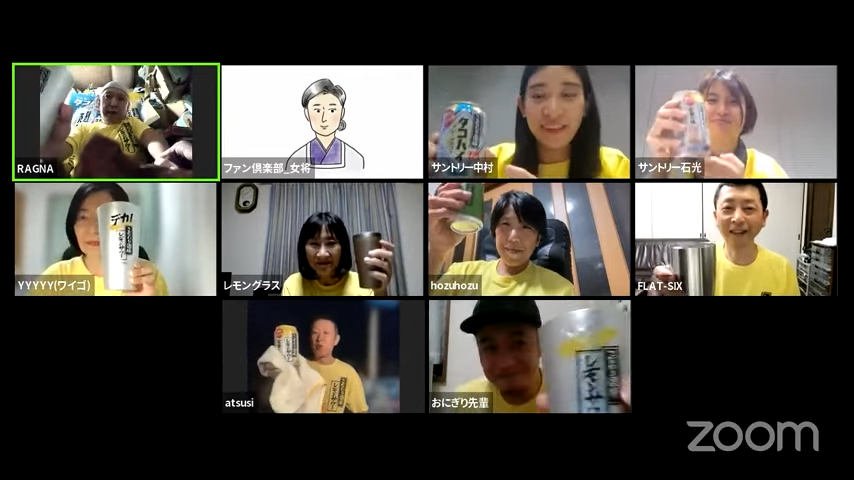
--It's interesting. While actually drinking alone or at home, it functions like an online bar, a place where people can enjoy the pleasure of connecting with others through alcoholic beverages. Does the fact that the volume zone is men in their 50s have something to do with this?
【Shu】 That may be so. The world today is not all that bright, and there is an aspect of an individual's daily life that is not that replaceable every day. If we could bring a little change to their daily lives through the community, I think they would feel it as a value.
The biggest difference between RTDs and beer or whiskey is that RTDs are easy and convenient. New products come out every week, and if you pay 100 or 150 yen, you can enjoy a different kind of fun than you did last week. I think that is the beauty of this category. Therefore, it is fine for people to visit this community with a casual sense of "what's interesting" without being overbearing. However, we would like to create a place where "once you pass through the goodwill, you are sure to be in a good mood.
--Lastly, what are your future plans for communication with customers, including the community?
【Shu】 As the name suggests, I believe that "Kodawari Sakeba" is a product born from the sake bar. There is an image of a "bar" that restaurants have created over a long period of time since the early Showa period. The brand "Kodawari Sakeba" is built on embodying this image. Therefore, even though we will continue to pursue growth as a brand, the most important thing we want to do is to give back to the "bar" that created this brand.
Due to the spread of the new coronavirus, the bankruptcy rate of restaurants reached a record high in 2024. There is a negative atmosphere toward alcohol nowadays, including a shift away from alcohol among young people.
However, there are positive aspects to drinking, such as the ability to be in a good mood, to have fun, and to connect with others. By embodying these qualities, we hope to energize bars through this brand. We want to do what we can to make people involved in restaurants and the various places where people drink alcohol throughout Japan feel positive. Of course, our products are for people to drink at home, but if we can inspire customers to visit real bars, that is also our true desire.
I believe this will be important for the continuation of the "Kodawari Sake Bar" brand for the next 5 to 10 years. There are many competing chu-hi drinks in the world, but they are all "drinks to be consumed at home. The part that connects to the outside world is our unique strength. Raising the value of Japan's unique bar culture will make this brand one-of-a-kind, and will resonate with customers. I would like to do various things toward that end.
--What about you, Ms. Ishimitsu, as a community representative?
【Ishimitsu】 While it is said that the number of people who drink alcohol is decreasing to begin with, I believe that "Kodawari Sake Bars" will become a brand that carries the message that "alcohol puts you in a good mood," "makes you feel positive," and "connects you with others. Therefore, I would like to make it a place where we can convey to our existing customers as well as to the world that "alcohol is such a positive thing.
Personally, I have had many opportunities to "give it a try" because "a friend was doing it" or "it was recommended to me," so I have a feeling that the importance of fan communication and community will continue to grow in the future. I will do my best to spread the enthusiasm generated by the community.
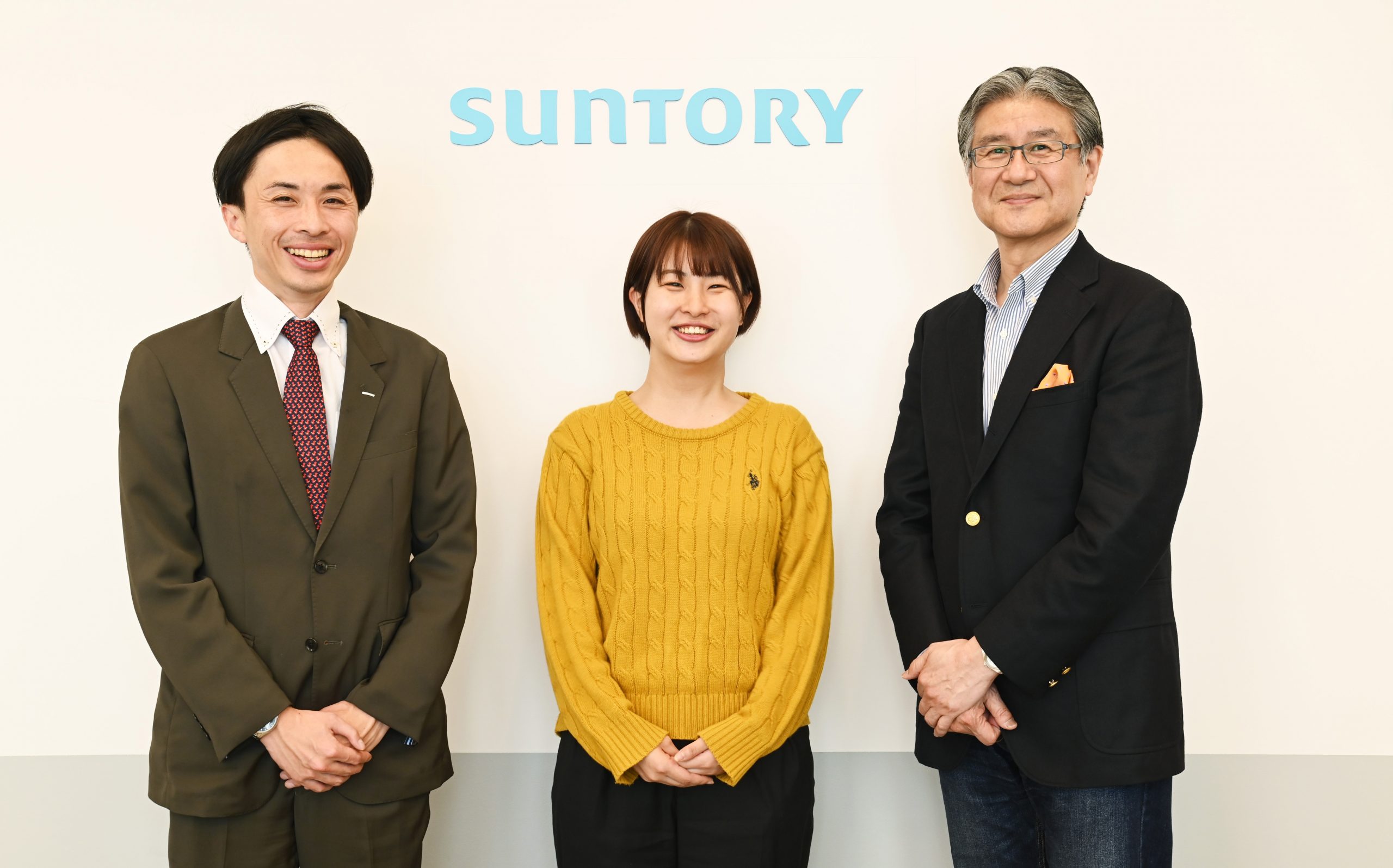 In the eighth installment of "Visit to a PRM Practice Company," we visited Suntory Spirits Ltd.
Many of the companies we have interviewed in this interview series have operated communities based on corporate brands or categories, but this "Kodawari Sake-Ba Fan Club" is a pure brand community. Furthermore, Suntory is a company that actively uses TV commercials, and we often see commercials for the Kodawari Sake-ba brand. We were very interested in Suntory's thoughts on the contribution of the community to brand development and the synergistic effects of the commercials.
I am convinced of the two-fold mechanism to strengthen the brand: a commercial to encourage people to pick up "Kodawari Sour" among the many lemon sours available, and a community that aims to create new fans among those who are already fans of the brand.
With the flood of information and various media contact points surrounding consumers, such as smartphones, digital OOH, and retail media, it is becoming increasingly difficult for consumers to receive information from companies and brands. It is important for companies and brands to create a motive that makes customers want to stay actively connected. With "Kodawari-Soba Fan Club," even if you are alone at home with a lemon sour in one hand and a smartphone in the other, the conversation will be as lively as if you were sitting next to each other at a bar. I thought it was wonderful that there are innovations throughout the restaurant to provide a place where customers can enjoy communicating with each other and make them want to visit again.
Suntory has been running a campaign to support restaurants in distress with the supportive message, "In life, there are restaurants. Suntory has been waging a campaign to support restaurants in distress with the cheering message, "There are restaurants in your life. Kodawari Sakeba" is a brand right in the middle of this campaign, and its mission is to connect the home-drinker and the bar, and to expand the enjoyment of drinking. It is the role of this community to impart a variety of wisdom for this purpose.
Suntory, which aims to become the world's No. 1 company in the RTD category by 2030, is attempting to use the community to learn about the advantages of RTDs, which can be easily picked up and enjoyed, from the customers' viewpoints in a virtual bar. Suntory is trying to become the world's No. 1 in the RTD category by 2030. (Interviewer: Tatsuo Ishii)
 Tatsuo Ishii, Executive Advisor, eLife Inc. Tatsuo Ishii, Executive Advisor, eLife Inc.He served as manager of a number of brands for 14 years at Kao Corporation, where he also launched Agience as a new business. In 2003, he established the Digital Marketing Center, where he was involved in the planning and operation of web-based strategies and established the Digital Marketing Center as the head of the center. In 2017, he was appointed as Executive Advisor for eLife Inc.. He is a part-time lecturer at the Graduate School of Business Administration, Waseda University, a Marketing Meister of the Japan Marketing Association, a member of the Digital Media Committee of the Japan Advertisers Association, the Chairman of the Brand Experience Jury of the Dentsu Advertising Awards, and an auditor at C Channel K.K. He is a leading marketing expert. |
(Composition: Atsuo Suzuki)